If we are to change the course of the epidemic, our response to TB must extend beyond biomedical interventions. Youth Month reminds us that effective TB programmes must integrate psychosocial support, strengthen households and caregivers, and address the structural conditions that shape vulnerability and young people’s wellbeing. For us, Youth Month is not only a moment of remembrance, but a call to build TB responses that protect young people’s health, dignity, opportunity, and futures. To lift the historic weight from the shoulders of future generations, we must ensure that surviving TB is accompanied by the genuine opportunity to recover, participate, and thrive.
To be a young researcher approaching the contemporary South African tuberculosis (TB) landscape from the socio-behavioural sciences is to occupy a unique historical and analytical juncture. As part of the first generation of scholars raised entirely in a post-apartheid society, our entry into public health is inherently shaped by a distinct positionality. We did not merely read about structural inequality; we grew up witnessing how the geographic, economic, and social architecture of the past continue to shape the present. Youth Month is not merely an annual commemoration of historical resistance; it is an urgent reminder of the present realities and future potential realities placed in jeopardy by a preventable and treatable disease. It calls us to confront how macro-level and socio-contextual factors manifest as immediate biological risks and profound social burdens among the country’s most vulnerable populations.
Across our work in TB research, clinical care, and socio-behavioural health, it is evident that TB is never an isolated clinical event. Its consequences are highly differentiated across stages of life, shaping households and relationships according to the age and developmental stage of the individual affected. For young children, TB can become a crisis of total dependency; its management increases the therapeutic load on primary caregivers, drains fragile domestic resources, and strains caregiver-child relationships at a time when children require safety, consistency, and care. For adolescents, the disease collides with a crucial period of identity formation and emerging autonomy, where stigma, peer relationships, and disruption to schooling can threaten social belonging. For young adults, a diagnosis may interrupt the precarious transition into independent life, affecting entry-level employment, higher education, and efforts to build financial stability.
These disruptions are not only clinical or social, but they are also deeply connected to mental health, relational wellbeing, and health-related quality of life. TB can affect whether a young child is able to play, sleep, eat, learn, and feel secure; whether an adolescent feels accepted by peers or able to return confidently to school; and whether a young adult can sustain relationships, pursue work, or imagine a stable future. For caregivers, the demands of treatment administration, uncertainty about illness, and financial strain can also affect emotional wellbeing and the capacity to provide consistent care. If success is defined only through diagnosis, cure, and treatment completion, we risk overlooking these quieter but enduring dimensions of recovery. A youth-centred TB response must therefore ask not only whether young people survive TB, but whether they are supported to recover, participate, and thrive.
This burden is profoundly intergenerational; transmission within South African households reflects a complex web of family relationships where infection can move between children, young adults, and older caregivers. These realities reveal important gaps in prevention, early detection, and household support for families already experiencing social and economic vulnerability. The COVID-19 pandemic fundamentally altered the socioeconomic landscape for many South African families, disrupting education, employment, and key developmental transitions. For many young people already navigating poverty and instability, a TB diagnosis compounds a fragile foundation, with lasting consequences for health and opportunity. The physical, social, and psychological effects of TB can alter a young person’s sense of self and future. By disrupting education, relationships, and emotional wellbeing, TB can constrain opportunities and deepen existing cycles of vulnerability. When families are simultaneously navigating poverty, violence, harmful substance use, and financial instability, adhering to treatment becomes one challenge among many. Adhering to a clinical protocol becomes a frustrating logistical hurdle rather than a primary focus. Health systems must recognise that people are managing not only illness, but the daily work of survival.
If we are to change the course of the epidemic, our response to TB must extend beyond biomedical interventions. Youth Month reminds us that effective TB programmes must integrate psychosocial support, strengthen households and caregivers, and address the structural conditions that shape vulnerability and young people’s wellbeing. For us, Youth Month is not only a moment of remembrance, but a call to build TB responses that protect young people’s health, dignity, opportunity, and futures. To lift the historic weight from the shoulders of future generations, we must ensure that surviving TB is accompanied by the genuine opportunity to recover, participate, and thrive.

At the end of June, Dr Jody Boffa stepped down from her role as Scientist to the TB Think Tank Secretariat and took up a faculty position at Concordia University of Edmonton in Canada. In this reflection, she shares some of the highlights of her time with the Think Tank, acknowledges the colleagues and partners who made the work so rewarding, and outlines how she will remain involved in South Africa’s TB response through ongoing research collaborations and participation in selected TB Think Tank Task Teams.
At the end of June, I stepped down from my role as Scientist to the TB Think Tank Secretariat and took up a faculty position in Public Health at Concordia University of Edmonton in Canada. While I am excited about this new chapter, I remain deeply connected to South Africa’s TB community and grateful for the opportunity I had to contribute to the work of the Think Tank over the past four and a half years.
The TB Think Tank occupies a unique space in South Africa’s TB response, bringing together diverse expertise to support evidence-informed policy and programme implementation. It has been a privilege to work alongside colleagues from the National Department of Health, academia, civil society, and implementing organisations, all united by a shared commitment to ending TB.
Some of the highlights of my time with the Think Tank include supporting the development of South Africa’s National TB Strategic Plan alongside Dr Aaron Sanj Karat, the National Department of Health, and many dedicated stakeholders; advancing technical guidance on TB preventive treatment and occupational health and safety; contributing to the national standard operating procedure for community-based TB screening using digital chest X-ray; supporting the incorporation of new evidence on urine Xpert into the package of care for adults with HIV who are hospitalised with possible TB, and supporting practical innovations to improve TB diagnosis and care, most recently through the development of a client education video with the Finding Missing People with TB Task Team to assist people who struggle to produce sputum specimens.
While these outputs are important, what I will remember most are the people. I have been fortunate to work alongside dedicated colleagues within the Secretariat, including Priashni Subrayen, Mthokozisi Dube, Nolwazi Nkosi, and, during my transition from the Secretariat, Farzana Sathar, who has now assumed the Scientist role. I have also greatly valued the opportunity to work closely with Prof Norbert Ndjeka, Dr Lindiwe Mvusi, and Prof Fareed Abdullah, whose leadership, expertise, and commitment to improving TB prevention and care in South Africa have been both inspiring and instructive. Together with the Task Team Chairs and co-Chairs and the many TB Think Tank members, they have made my time with the Think Tank exceptionally rewarding.
Although I am no longer part of the Secretariat, this is not a complete farewell. I continue to hold an affiliation with The Aurum Institute and remain involved in TB research and implementation science projects in South Africa. I also look forward to continuing my engagement with selected TB Think Tank Task Teams in this capacity. I am grateful that modern technology allows us to continue collaborating across continents in pursuit of shared goals.
Thank you to everyone who has made my time with the TB Think Tank such a positive experience. It has been a privilege to work alongside you, and I look forward to seeing the continued impact of the Think Tank’s work in the years ahead.

My journey in the health sector began in 2006 in a formative role as a Data Capturer for the Voluntary Counselling and Testing (VCT) programme at the Centre for Positive Care in Limpopo Province. This experience fostered my deep appreciation for the critical role of high-quality data in improving health outcomes. It also sparked my curiosity and initiative, leading to the establishment of a meaningful partnership with the University of Virginia (USA) through the People’s Culture and Environment Study Abroad Programme.
I am an impact-driven public health professional currently serving as the Director for Monitoring, Evaluation, Reporting, and Learning (MERL) in the National Department of Health Global Fund Cluster. With over two decades of experience in MERL, I have played a pivotal role in developing and strengthening systems for HIV, tuberculosis (TB), and Resilient and Sustainable Systems for Health (RSSH) programmes funded by the Global Fund and other funders.
I am widely recognised for my “BIG PICTURE” mindset, grounded in a strong passion for analysing data and generating actionable insights for informed decision-making. My professional philosophy is captured in my guiding belief: “When others say it cannot be done, I ask—when can I start?” This mindset has consistently driven innovation, resilience, and measurable impact throughout my career.
My journey in the health sector began in 2006 in a formative role as a Data Capturer for the Voluntary Counselling and Testing (VCT) programme at the Centre for Positive Care in Limpopo Province. This experience fostered my deep appreciation for the critical role of high-quality data in improving health outcomes. It also sparked my curiosity and initiative, leading to the establishment of a meaningful partnership with the University of Virginia (USA) through the People’s Culture and Environment Study Abroad Programme.
In 2007, I advanced to the role of Monitoring and Evaluation Officer for a USAID/PEPFAR-funded Orphans and Vulnerable Children (OVC) programme, where I served until 2013. During this time, I designed and implemented robust MERL systems and led capacity-building initiatives for non-governmental organisations, strengthening accountability and enhancing programme impact.
In 2013, I joined Family Health International (FHI 360) and was seconded to the Limpopo Provincial Department of Health under the HIV/AIDS, STIs, and TB (HAST) programme within the Strategic Information Management (SIM) unit. In this role, I provided technical leadership in the design and implementation of M&E systems for Care and Support programmes. I also strengthened data use for decision-making, co-facilitated performance review meetings, and contributed to the development of funding guidelines for non-profit organisations supporting HAST programmes in the province.
In 2015, I joined the National Department of Health Global Fund Cluster as Deputy Director for Monitoring and Evaluation and was promoted to Director in 2019. In these roles, I have provided strategic leadership and oversight of MERL systems supporting the Global Fund Programme Management Unit, sub-recipients, and other grant implementers. I have also contributed to the development of national monitoring and evaluation strategies, strategic documents and TB/HIV guidelines. Notably, I supported the development of four successful TB/HIV Global Fund proposals, securing over USD 923 million for South Africa across multiple funding cycles since 2015 to date.
I am an active member of the South African TB Think Tank and serve as Co-Chair of the Finding Missing People with TB Task Team. A key achievement amongst others in this role was coordinating the development of national Standard Operating Procedures for community-based TB screening using digital chest X-ray technology equipped with Artificial Intelligence (AI)—an important innovation aimed at improving TB detection. I have also collaborated with various institutions on TB/HIV research and evaluations to strengthen evidence-based programming and improve health outcomes.
I remain deeply committed to capacity building, mentoring health professionals in data management, analysis, and interpretation, and fostering a culture of accountability, performance, and continuous learning within the health system.
Beyond my professional work, I value quality time with my family and engage in activities that bring balance and tranquillity to my soul. I love technology, enjoy travelling, bass fishing, reading the Bible, and teaching. These pursuits enrich my leadership approach and sustain my passion for improving health outcomes and strengthening communities.

Don Mudzengi is a health economist and public health researcher with over 15 years of experience in tuberculosis (TB), HIV, economic evaluation, implementation science, digital health, and clinical trials. His work focuses on applying health economics evidence to inform decisions on the design, delivery, affordability, and value of public health interventions.
Don holds an MSc in Epidemiology from the University of Pretoria and a BSc from the University of Zimbabwe. Throughout his career, he has worked on projects across South Africa, Mozambique, Tanzania, Lesotho, Ethiopia, and Zimbabwe, collaborating with multidisciplinary teams and international partners.
His expertise spans TB case finding, TB preventive treatment, diagnostics, TB/HIV integration, digital health, and innovative service delivery models. He has led research on both health system and patient costs, helping programmes identify cost-effective approaches to maximise limited resources. Notably, Don pioneered TB patient costing in South Africa, laying the groundwork for the National TB Patient Costing Survey.
A member of the South African TB Think Tank since its establishment in 2017, Don currently serves as Co-Chair of the Epidemiology, Modelling and Health Economics Task Team. He is also completing his PhD at the University of the Witwatersrand, where his research evaluates the use of mobile health (mHealth) technologies for TB contact tracing and improving linkage to care.
Don has authored numerous peer-reviewed publications on health economics, TB, HIV, digital health, implementation science, and clinical trials. Outside of work, he enjoys watching motorsport and playing football.

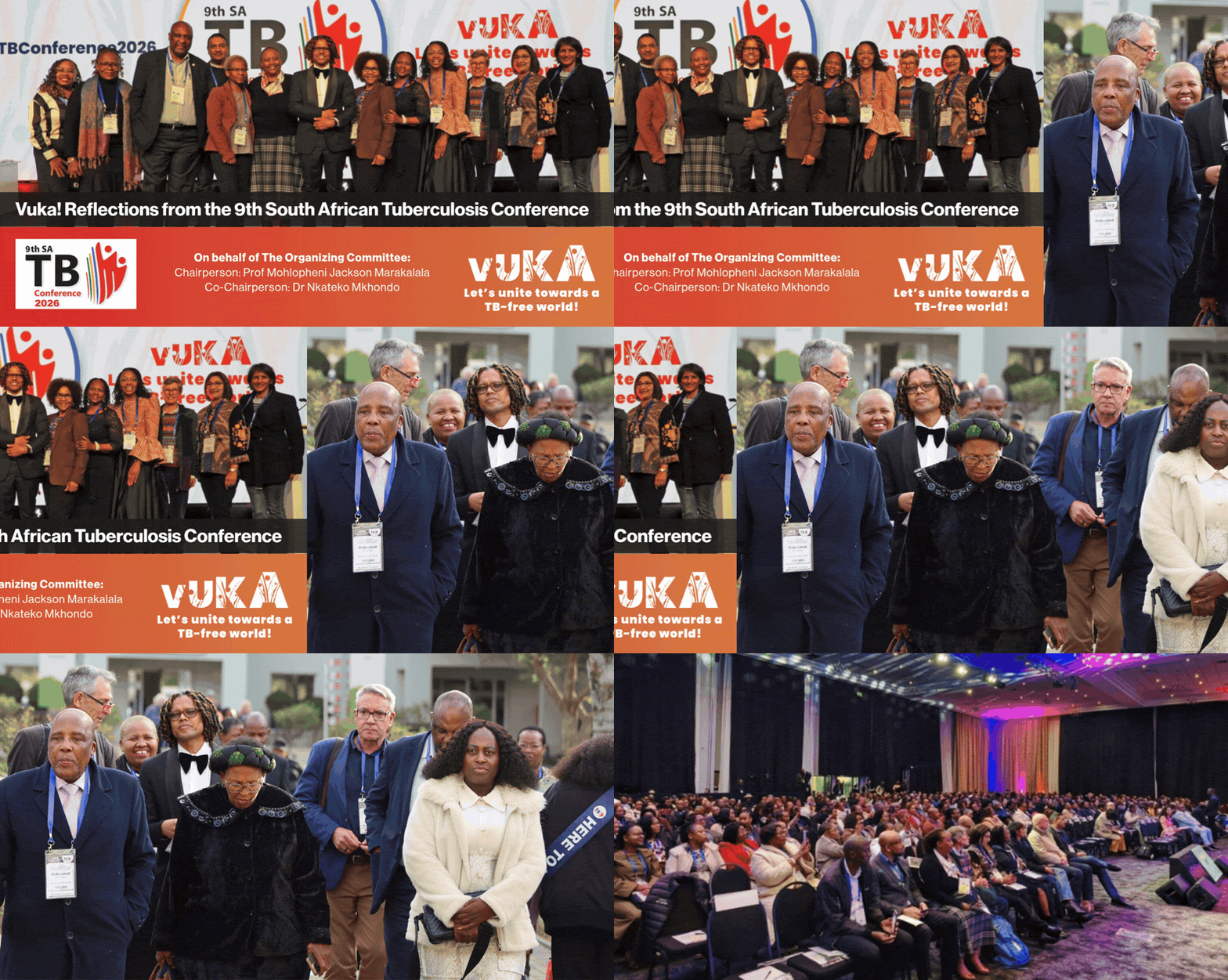
On behalf of the Scientific Programme Committee, it was both an honour and a privilege to convene the 9th South African Tuberculosis Conference, 8-11 June, Birchwood Hotel, Gauteng, a gathering that marked a critical moment in our collective fight against TB.
Far more than a traditional scientific meeting, this conference became a powerful platform for connection, collaboration, and action, bringing together 1,134 delegates from across government, academia, healthcare, civil society, industry, and affected communities. Together, we demonstrated that the fight against TB is strongest when it is shared.
Click to read more about the Optimising Treatment Outcomes Task Team Chair
Tuberculosis remains one of the world’s most urgent public health challenges, with Africa carrying a disproportionate burden. Although significant progress in science, policy, and community engagement has moved us closer to our goals, much more remains to be done. Under the theme “Vuka! Let’s unite towards a TB-free world!”, the conference called on all stakeholders to rise together with resilience, purpose, and shared commitment.
The programme reflected this vision through diverse and interconnected streams, including basic and clinical science, epidemiological and operational research, and patient and civil society mobilisation and advocacy. Importantly, it emphasised that TB is not only a biomedical challenge, but one deeply shaped by social and economic realities.
A major highlight was the strong political presence, including the Minister and Deputy Minister of Health; the Deputy Minister of Social Development; Health MECs from Gauteng, KwaZulu-Natal, and Mpumalanga; the acting Director-General of Health; senior Department of Health leadership; and the Vice President of South Africa. Their participation reinforced TB as a national priority and reaffirmed commitment to the National TB Recovery Plan.
At a time when global funding for public health is under pressure, the conference underscored a powerful message:
Cutting-edge research and innovation were at the forefront of discussions, with keynote speakers emphasising collaboration as essential to accelerating progress.
Notable advances included rapid molecular diagnostics closer to the point of care, non-sputum-based diagnostic approaches, tongue-swab testing as a patient-friendly alternative, and biomarker-based diagnostics using blood and other accessible samples. These innovations hold promise for improving early detection and treatment, particularly in underserved communities.
The conference also celebrated meaningful progress achieved in South Africa over the past decade, including a 57% reduction in TB incidence, a 16% decline in TB-related mortality, and improved treatment outcomes for drug-resistant TB through shorter, safer regimens such as BPaL and BPaLM. Encouraging developments in vaccine research were also highlighted, with approximately 20 TB vaccine candidates currently in global clinical development.
Researchers presented new insights into blood-based biomarkers, TB disease progression, immune responses, novel diagnostic technologies, and advanced imaging approaches. Particular attention was given to the growing burden of post-TB lung disease, highlighting the need for greater investment in long-term care for TB survivors.
A defining feature of the conference was the strength of its partnerships. Collaboration across government, WHO, SAMRC, SANAC, NHLS/NICD, academic institutions, research networks, civil society, and communities demonstrated what is possible when efforts are aligned. As reflected in the Organising Committee Chairperson’s closing remarks:
The conference did more than share knowledge; it inspired action. It helped move conversations beyond silos towards meaningful partnerships, and it amplified community voices rather than speaking on their behalf.
As the conference drew to a close, a clear and unified message emerged:
The true impact of this gathering will be measured not by what was said, but by what happens next. The conference emphasised the need to turn evidence into implementation, expand prevention and case-finding efforts, ensure rapid access to quality care, strengthen community-centred services, and invest in research, innovation, and health systems.
This conference was more than an event; it was a movement whose legacy will continue through stronger TB programmes, new collaborations and partnerships, policy influence, expanded community reach, and improved lives. The tools, expertise, and partnerships needed to end TB are already within reach; what is needed now is sustained commitment and collective action.
As we reflect on the success of this gathering, we extend our gratitude to every delegate who contributed their voice, expertise, and passion. The conference succeeded because everyone showed up, engaged, and committed to action.
Vuka! Rise together. Act together. Deliver together.
Together, we will achieve a TB-free South Africa, and a TB-free world.
On World TB Day, 24th March, TB Proof led a series of impactful activities across the Cape Metro in the Western Cape, bringing TB awareness, education and services closer to communities.
School based events, implemented in partnership with local health facilities and the Metro East Education Department, focused on building awareness among learners. Sessions covered TB disease, testing, TB preventive therapy (TPT) and stigma reduction, brought to life through powerful survivor stories that resonated with young audiences.
At community level, a vibrant jamboree of services created a one stop platform for health access. Community members were able to receive on site TB testing alongside a range of other health services, while also engaging in educational activities and hearing personal stories from TB survivors, helping to break down stigma and encourage health seeking behaviour.
Health facility based activities reinforced these efforts by strengthening TB education at point of care. With a focus on at risk groups, these engagements emphasised the importance of testing, addressed common myths and misconceptions and promoted the uptake of TB preventive therapy.
Together, these activities reflect a coordinated, community centred approach to advancing TB awareness, testing and prevention where it is needed most.


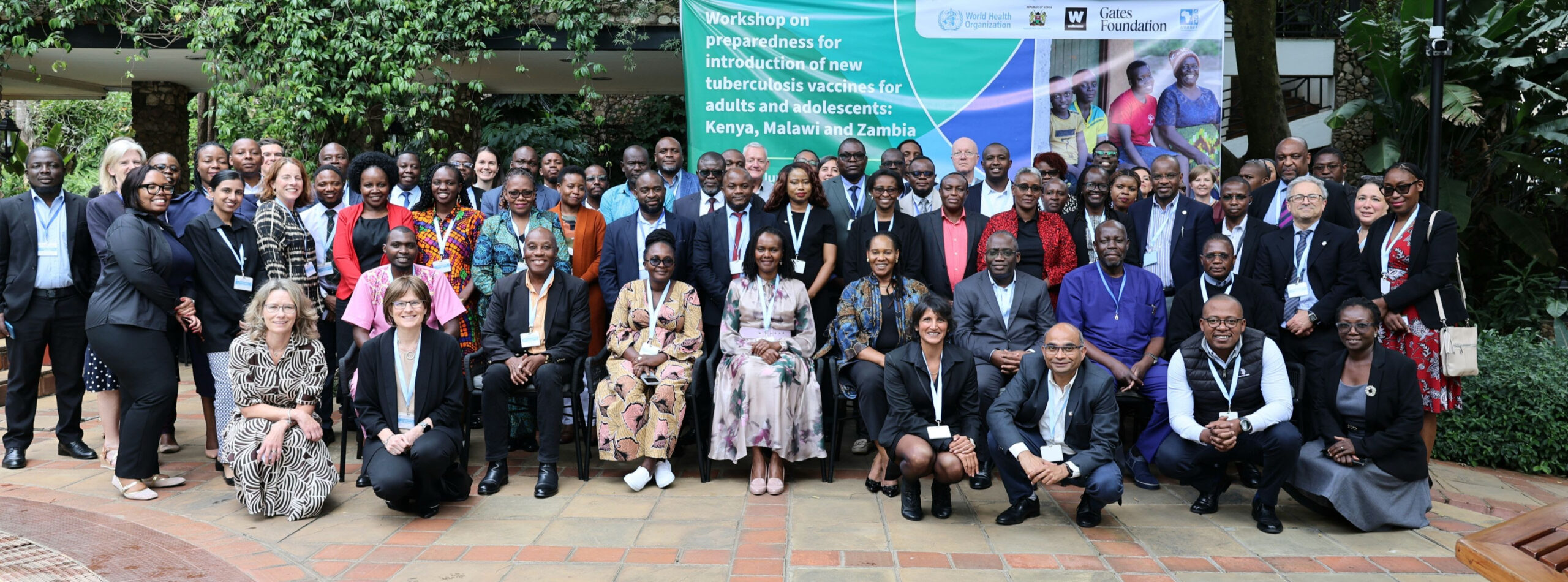
Ministry of health officials from Kenya, Malawi and Zambia joined more than 80 tuberculosis (TB) vaccine stakeholders, including TB survivors and representatives from civil society, technical and regulatory agencies, donors, and implementing partners to catalyze country preparedness for the introduction of novel TB vaccines, currently under clinical development for adults and adolescents, at a workshop hosted by the World Health Organization (WHO) in Nairobi, Kenya from 3-5 June.
The three countries are among the global frontrunners preparing for the potential rollout of a new class of TB vaccines that could transform efforts to end one of the world’s deadliest infectious diseases. A new TB vaccine could be licensed as early as 2029, depending on clinical trial results.
WHO estimates that over 25 years a vaccine with 50% efficacy could avert up to 76 million new TB cases, 8.5 million deaths, 42 courses of antibiotic treatment and US$ 6.5 billion in costs faced by TB-affected households, especially for the poorest and most vulnerable.
“Tuberculosis remains a significant challenge in Africa, causing approximately 2.5 million people falling ill and over 400 000 deaths each year,” said, Dr Neema Rusibamayila Kimambo, WHO Representative for Kenya, a.i. in opening remarks at the workshop. “Kenya is proud to participate in late-stage clinical trials for new TB vaccines for adults and adolescents and will be one of the first countries to implement in the region. We are very pleased to host this meeting that brings together TB and immunization colleagues from across east Africa to exchange ideas, experiences and knowledge that will help each of the countries envision roadmaps for implementation of novel TB vaccines as part of broader efforts to combat TB.”
Lessons learned and road maps for vaccine rollout
The workshop provided updates on the most advanced TB vaccine clinical trials, and facilitated panel discussions on priority populations, delivery strategies, evidence needs for country adoption and decision-making, and the sharing of lessons learned from other new vaccine introductions, such as those for COVID-19 and malaria, to inform planning for novel TB vaccines. The presentations and discussions highlighted many complex factors required for successful introduction and the urgent need for evidence-based implementation planning.
A key outcome of the workshop was the identification of priority actions to strengthen country preparedness. Discussions identified key priorities to include in TB vaccine introduction road maps that reflect each country’s vaccine use cases and potential delivery strategies, and to identify key stakeholders and their roles. Countries will continue these deliberations over the next few months to inform the action roadmaps.
Future integration of new TB vaccines
Kenya, Malawi and Zambia recognized that early integration of new TB vaccines into national TB and immunization programmes at all levels, and across national strategies and plans, will be essential. However, meeting participants stressed that implementation approaches must be tailored to each country’s specific context, taking into account the health landscape, health system readiness, and the level of stakeholder engagement and community support for new TB vaccines.
To maximize impact, countries agreed on the importance of establishing multi-functional technical working groups that bring together key national-level stakeholders to guide planning and coordination efforts, including extending to parliamentary and other high-level decision-making bodies to build political commitment, secure sustainable domestic financing, and foster an enabling policy environment. Stakeholder engagement must also include civil society organizations, including partnerships with faith-based communities and other trusted local actors to build community acceptance and support equitable vaccine access.
Countries also highlighted that funding support may be needed to undertake implementation research and country-specific modelling studies as required by national regulators and National Immunization Technical Advisory Groups. As a next step, countries committed to work on implementation strategies that are step-wise and highly targeted in early stages depending on global funding support.
Accelerating global readiness
The workshop was conducted through a collaboration of WHO TB and immunization focal points, and regulatory specialists across global, regional and country levels, and as part of TB Vaccine Accelerator activities.
The Kenya-based meeting follows country preparedness workshops held in Indonesia in 2024 and South Africa in 2025. All these countries are participating in TB vaccine trials. Participants from the earlier South Africa workshop attended to share their lessons learned and the status of their preparedness activities.
The workshop demonstrated a strong commitment among African countries and partners to work together, share knowledge, and build the foundations needed for the successful introduction of new TB vaccines that could save millions of lives.
Learn more
The Tuberculosis Vaccine Accelerator Council
Global forum takes stock of progress on new TB vaccines and for adults and adolescents

Catch up on the TB Think Tank’s recent webinar series, now available to watch online!
The April webinar featured Kristian van Kalmthout and Tanya Dube, who presented “Early Insights on Aida: An AI-Powered Digital Treatment Supporter,” highlighting the potential of AI to support TB treatment adherence.
A special edition of the TB Think Tank Webinar Series for TB and HAST Coordinators featured “Drug-Resistant TB (DR-TB) Clinical Updates,” focusing on the latest clinical guidance and strengthening implementation of TB guidelines.
In May, Drs Juli Switala and Juaneta Luiz presented “Paediatric TB Virtual Ward Round 2.0: Putting Guidelines into Practice with Real Patients,” offering practical, case-based discussions on implementing paediatric TB guidelines.
The June webinar featured Prof Brian Allwood, who presented “Post-TB Lung Disease: What is the Problem?” exploring the burden of post-TB lung disease and its implications for patient care.


Anthony, M. G., Hoddinott, G., Baloyi, D. P., Hesseling, A. C., & van der Zalm, M. M. (2025). Identifying candidate items for a health-related quality of life measure in young children with respiratory illness: A scoping review of generic and disease-specific measures. PLoS One, 20(5), e0322493.
https://doi.org/10.1371/journal.pone.0322493
Chihota, V., Waggie, Z., Cardenas, V., Mngadi, K., Ndebele, F., Brumskine, W., Sebe, M., Martinson, N., Wang, S. H., Yimer, G., Nguenha, D., Garcia-Basteiro, A. L., van den Hof, S., Grant, A. D., Charalambous, S., Fielding, K. L., Chaisson, R. E., & Churchyard, G. (2026). Safety of short-course weekly rifapentine and isoniazid (3HP) for TB preventive treatment at conception and during first trimester in women living with HIV: A secondary analysis of WHIP3TB trial. Clinical Infectious Diseases.
https://doi.org/10.1093/cid/ciag315
Conradie, F., Badat, T., Poswa, A., Rajaram, S., Kooverjee, S., Maartens, G., Meintjes, G., Hughes, J., Schaaf, H. S., Howell, P., Ndjeka, N., & Phillips, P. P. J. (2026). A pragmatic trial of a 6-month strategy for rifampicin-resistant tuberculosis. New England Journal of Medicine, 394(24), 2429–2439.
https://doi.org/10.1056/NEJMoa2503687
David, A., Scott, L., da Silva, P., & Stevens, W. (2026). Closing gaps through innovation in the tuberculosis pathology value chain. Journal of Clinical Tuberculosis and Other Mycobacterial Diseases, 44, 100623.
https://doi.org/10.1016/j.jctube.2026.100623
de Villiers, A. K., Meehan, S.-A., Osman, M., Dunbar, R., Seddon, J. A., van Schalkwyk, C., Maarman, G. J., Du Preez, K., Hesseling, A. C., & Marx, F. M. (2026). Impact of tuberculosis healthcare service disruptions during and after the COVID-19 pandemic in South Africa—a mathematical modelling study. The Lancet Regional Health – Africa, 100047.
https://doi.org/10.1016/j.lanafr.2026.100047
Fisher, K. L., Mpotje, T., Nargan, K., et al. (2026). NETosis associates with human TB lung tissue destruction and disease pathogenesis. EMBO Molecular Medicine.
https://doi.org/10.1038/s44321-026-00435-3
Giovanatti, A., & Shapiro, A. E. (2026). Anticipating tuberculosis vaccine acceptability in Kenya and South Africa: A narrative review of behavioral and social drivers and strategies to optimize acceptability. Vaccine, 79, 128457.
https://doi.org/10.1016/j.vaccine.2026.128457
Hoddinott, G., Draper, H. R., Vanqa, N., Myeni, S., Staples, S., Sachs, T., Raffique, M., Tshethu, N., Palmer, M., Viljoen, L., Inabathina, K., Taneja, R., Hesseling, A. C., & Garcia-Prats, A. J. (2025). Children’s preferences among six novel moxifloxacin and linezolid-dispersible tablet formulations. IJTLD Open, 2(4).
https://doi.org/10.5588/ijtldopen.24.0546
Howell, P., Lombardi, A., Brumskine, W., Mikiashvili, L., Boekelheide, K., Moreira, J., Holsta, A., Betteridge, M., Thompson, L., Crook, A., Bruinenberg, P., Beumont, M., Sun, E., & Conradie, F. (2026). Preserved Spermatogenesis and Hormonal Function in Men Receiving a Pretomanid Regimen (BPaMZ) for Pulmonary Drug-Resistant Tuberculosis. Clinical pharmacology and therapeutics, 10.1002/cpt.70363. Advance online publication.
https://doi.org/10.1002/cpt.70363
Mbano, I. M., Liu, N., Wadsworth, M. H., II, Chambers, M. J., Mpotje, T., Asowata, O. E., Nyquist, S. K., Nargan, K., Ramsuran, D., Karim, F., Hughes, T. K., Bromley, J. D., Krause, R., Naidoo, T., Tezera, L. B., Reichmann, M. T., Ganchua, S. K., Kløverpris, H. N., Dullabh, K. J., Madansein, R., … Leslie, A. (2026). Single-cell and spatial profiling highlights TB-induced myofibroblasts as drivers of lung pathology. Journal of Experimental Medicine, 223(3), e20251067.
https://doi.org/10.1084/jem.20251067
Mcinziba, A., Wademan, D. T., Zimri, K., Jacobs, S., Mcimeli, K., et al. (2025). Experiences of children and their caregivers affected by multidrug-resistant tuberculosis in Cape Town, South Africa. PLoS One, 20(5), e0323492.
https://doi.org/10.1371/journal.pone.0323492
Olson, A. M., Wood, R. C., Sithole, N., Govender, I., Grant, A. D., Smit, T., David, A., Stevens, W., Scott, L., Drain, P. K., Cangelosi, G. A., & Shapiro, A. E. (2026). Tongue swab-based targeted universal tuberculosis testing in people living with HIV in KwaZulu-Natal, South Africa. medRxiv.
https://doi.org/10.64898/2026.04.17.26351084
Vanqa, N., Viljoen, L., Hoddinott, G., Hesseling, A. C., Osman, M., et al. (2025). Lessons from a systematic tracing process aimed to reduce initial loss to follow-up (ILTFU) among people diagnosed with tuberculosis (TB) in Cape Town, South Africa. PLoS One, 20(5), e0323943.
https://doi.org/10.1371/journal.pone.0323943
Wademan, D. T., Hoddinott, G., Kavalieratos, Z., et al. (2025). Understanding the relationship between adolescents with tuberculosis and health services: An in-depth qualitative study from Cape Town. BMJ Open, 15, e094295.